Home | About Us | Contact Us | Email
 
» Places To Visit In Jaipur
  »
  »
  »
  »
  »
  »
    » Amber Fort In Jaipur
    » Birla Temple In Jaipur
    » City Palace In Jaipur
    » Central Museum In Jaipur
    » Hawa Mahal In Jaipur
    » Jal Mahal In Jaipur
    » Jaigarh Fort In Jaipur
    » Kanak Vrindavan Garden In Jaipur
    » Nahargarh Fort In Jaipur
    » Chokhi Dhani In Jaipur
    » Govind Devji Temple In Jaipur
    » Jantar Mantar In Jaipur
    » Laxmi Narayan Temple In Jaipur
    » Moti Doongri Temple In Jaipur
    » Galta Ji Temple In Jaipur
    » Ram Niwas Garden In Jaipur
    » Jaipur Ramgarh Lake
    » Royal Cenotaphs Of Jaipur
    » Jaipur Sisodia Rani Bagh (Garden)
    » Statue Circle In Jaipur
    » Vidyadhar Garden In Jaipur
    » Zoological Park & Garden In Jaipur
   
» Jaipur Information Guide
» Jaipur Excursions
» Fairs & Festivals In Jaipur
» Jaipur Travel Guide
» Jaipur Travel Itinerary
» Car & Coach Rental In Jaipur
» Hotels In Jaipur
» Placement Agencies In Jaipur
» Lakes In Jaipur
» National Parks & Wildlife Sancturies
» Relegation In Jaipur
» ATM Centres In Jaipur
» Hospitals In Jaipur
» Jaipur Business Directory
» Education In Jaipur
» Main Markets In Jaipur
» Restaurants In Jaipur
» Bars In Jaipur
» Disco Theques In Jaipur
» Jaipur Travel Agents
» Finance Companies In Jaipur
» Banks In Jaipur
» Insurance Companies In Jaipur
» Jaipur Jewellery
» Handicrafts In Jaipur
» Jaipur Sanganer Airport
» Temples In Jaipur
» Forts & Monuments In Jaipur
» Museums In Jaipur
» Sawai Mansingh Stadium Jaipur
» Jaipur Cafes/Coffee House
» Cinema Halls In Jaipur
» Luxury Train
» Jaipur Railway Stations
» Jaipur Bus Stand
» Hostels In Jaipur
» Jaipur Tourist Information Centers
» Nightlife In Jaipur
» Jaipur Business Directory-2
» Airlines Offices In Jaipur
» Jaipur Emergency Telephone Numbers
» New Year Celebrations
» Honeymoon In Jaipur
» Holiday In Jaipur
» Sports In Jaipur
» Jaipur Must Visit Places
» Dress In Jaipur
» Jaipur Departmental Stores
» Service Providers In Jaipur
» Jaipur Travel Agent
» About Us
» Contact Us
   
 
  Home » Places To Visit In Jaipur » Jantar Mantar In Jaipur
 
Jantar Mantar In Jaipur
 
Jantar Nantar Jaipur 
Location: Just next to the entrance of City Palace
Built by: Maharaja Jai Sawai Singh
Built in: Between 1727 and 1733
Highlights: Largest Stone Astronomical Observatory in the World
How to reach: One can easily reach Jantar Mantar from the city by taking local Buses, Rickshaws and Taxis

Jantar Mantar- Colossal Observatory
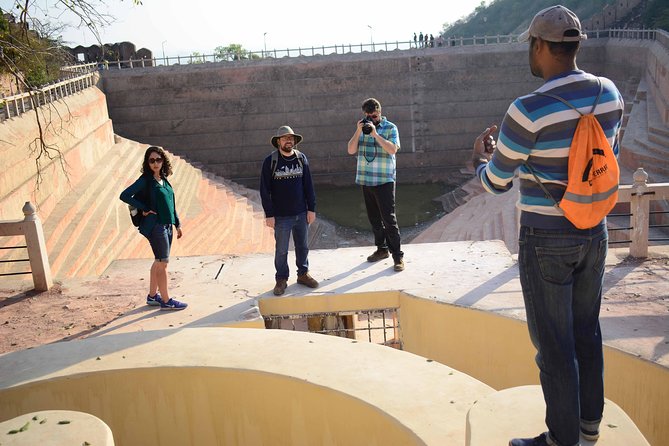
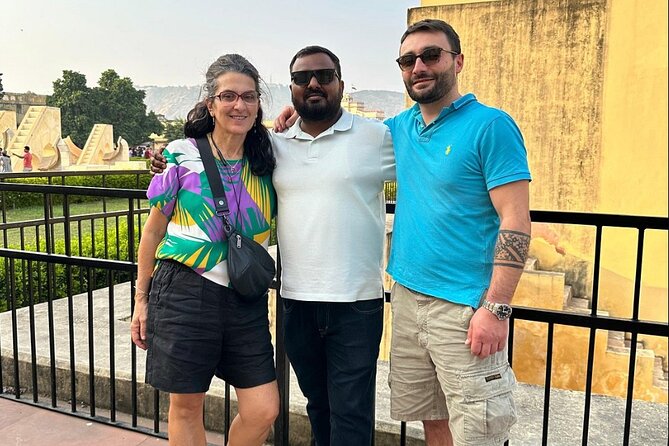
Jantar Mantar, built between 1728 and 1734, literally means the ‘instruments for measuring the harmony of the heavens’. Jai Singh, the brain behind the grand project, chose stone with marble facing. This was the biggest of all his observatories and the only one built of stone. He used it daily, often with his astronomy gurus Pandit Jagannath and Kewal Ram. In all there are 17 instruments in the Jantar Mantar complex. The function of each instrument is rather complex but serves a particular function where time plays the main theme.


Instruments Used in Jantar Mantar
The instruments and their functions are given below in the order of their anti-clockwise position in the complex. The large Kranti Yantra was employed for the measurement of the longitude and latitude of the celestial bodies. The Diganta Yantra was deviced to measure the azimuth (arc of the celestial great circle from Zenith to horizon) of planetary bodies. Similarly, the Small Ram Yantra and the Large Ram Yantra are used to find the altitude and the azimuth. The Chakra Yantra gives the angular measurement of an object from the equator. The Jai Prakash Yantra determines the precise coordinates of celestial bodies and the small iron plate strung between the crosswires gives the sun’s longitude and latitude and the zodiacal sign that it is passing through. Its main function is to keep an eye on all the other instruments.


Adequacy of Specific Yantras
The Rashivalayas Yantra operates in the same manner as that of the Samrat Yantra and has one sundial for each of the zodiac signs. Five of them (Gemini, Taurus, Cancer, Virgo and Leo) are at the back from north to south. Aries and Libra face them followed by Aquarius, Pisces, Capricorn, Scorpio and Sagittarius from north to south. It helps in taking readings the moment each zodiacal sign crosses the meridian. The Large Samrat Yantra is based on the same principle as that of the small one but in size it is 10 times larger and more accurate by 2 secs. The sundial is 27.4m high and is still used on the Guru Purnima (full moon day in the month of Jul/Aug) to forecast the onset of monsoon. The Dakshina Yantra is a wall is aligned along the north-south meridian. It is mainly used to observe the position and movement of the celestial bodies when they pass over the meridian.

The Disha Yantra has only one function and that is to point towards the north. The Unnathamsa Yantra is used to find the altitudes of the astral bodies. Observations can be made round the clock and the sunken steps help in taking readings from any portion of the dial. The Raj Yantra or the King of Instruments is used only once a year to calculate the Hindu calendar, the details of which are based on the Jaipur Standard. To do so a telescope is fixed over the central hole. A bar for sighting is then attached at the back of the instrument. The plain disk is used to record the sightings.The Observer’s Seat belonged to Maharaja Jai Singh and was used for observing the wonders of the sky and universe. The Narivalya Yantra is a sundial with two dials; one facing north when the sun is in the Northern Hemisphere (21 Mar-21 Sep) and the other facing south for the rest of the year.

The Dhruva Yantra helps in finding the position of the Pole Star at night and also those of the 12 zodiac signs. It is based on an entirely different system to what is used today for the same purpose. Traditionally, human breath, approximately of 6 secs was used as the standard unit of measurement. The Small Samrat Yantra is a triangular structure and has a large sundial with quadrants at the borders given in hours and minutes. The arc on the left displays the time from sunrise to midday and the one on the right from midday to sunset. The sundials have been constructed on Latitude 27°N and the reading can be adjusted to the Indian Standard Time (84°N) but that must be done according to the month and the solar position.


General Hotel Booking Form
 
Name:
Email:
Country
Telephone:
No. of Persons: Adults:
Children:
Start Your Trip:
Stay Duration :
Comments:


  Rajasthan Attractions
  Rajasthan Desert
  Rajasthan People
  Travel Information
     
 
Home | About Us | Contact Us | Link Exchange
Copyright © Navya Infomedia , All Rights Reserved
Site Developed by Navya Infomedia - Web Design India Company.
Web Design India Company